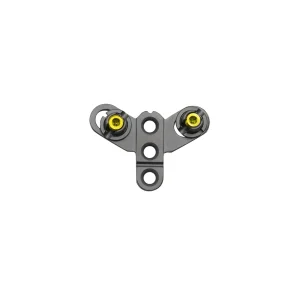
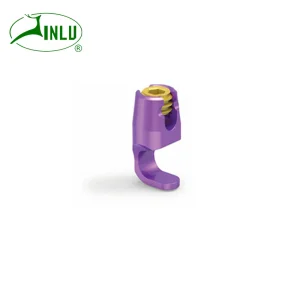
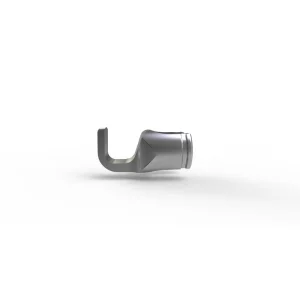
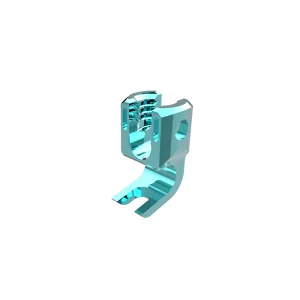
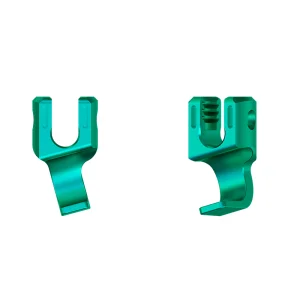
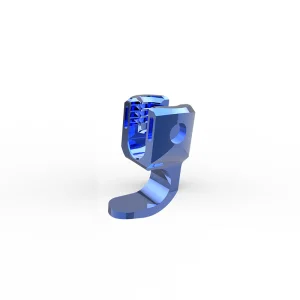
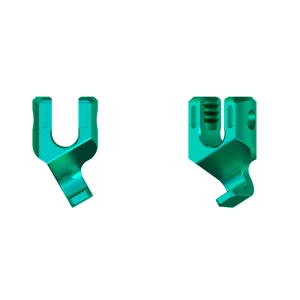
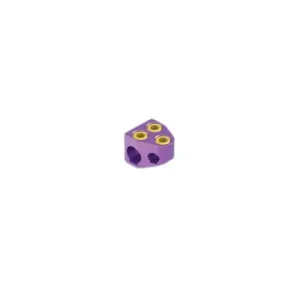
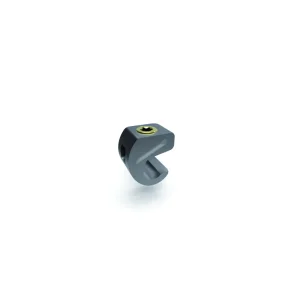
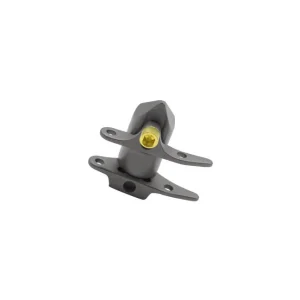
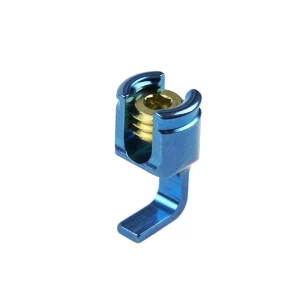
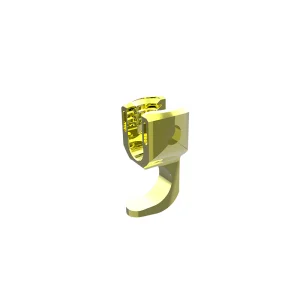
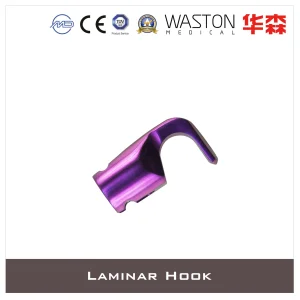
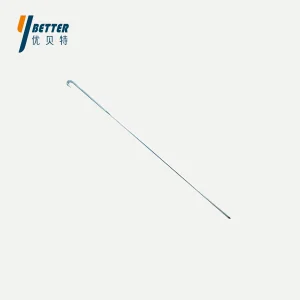
Advanced vertebral hooks and rods designed for maximum stability and patient safety.
The global market for Spinal Hooks & Rods has witnessed exponential growth over the last decade. As the world population ages, the prevalence of degenerative spine conditions, scoliosis, and traumatic spinal injuries has surged. Modern healthcare systems in North America, Europe, and the Asia-Pacific region are increasingly demanding high-performance internal fixation systems that offer long-term stability and biocompatibility.
In the industrial sphere, the manufacturing of spinal rods and hooks has transitioned from standard stainless steel to advanced Grade 5 Titanium Alloys (Ti6Al4V) and Cobalt-Chrome. This shift is driven by the need for MRI compatibility, higher fatigue strength, and reduced stress-shielding effects. As a leading manufacturer, we understand that suppliers must not only provide products but comprehensive surgical solutions that include instrumentation sets designed for precision and ease of use in the operating room.
Where Technology Meets Orthopedic Excellence
The current trend in spinal surgery is moving toward Minimally Invasive Surgery (MIS). This requires spinal hooks and rods to be more contoured, low-profile, and compatible with percutaneous delivery systems. Furthermore, there is a rising demand for "Hybrid Fixation," where pedicle screws and laminar hooks are used together to provide optimal grip in osteoporotic bone or complex pediatric deformities.
Global procurement needs have also shifted. Hospital groups and large-scale distributors are looking for resilient supply chains. The volatility of raw material prices and the need for stringent regulatory compliance (ISO 13485, CE, FDA) have led many Western enterprises to seek strategic partnerships with top-tier Chinese factories that offer the perfect balance of high-end precision and manufacturing scalability.
Located in the heart of China's medical manufacturing hub, Chengdu Medev Medical Instruments Co., Ltd. leverages decades of industrial expertise. Why choose a Chinese manufacturer for your spinal implants?
A Legacy of Innovation in Orthopedic Implants
Chengdu Medev Medical Instruments Co., Ltd., Ltd was founded in 2001, covers an area of 18,000 ㎡ , including a floor area of over 15,000 ㎡ . Its registered capital reaches 20 million Yuan. which is specialized in product research, design and manufacturing of orthopedic implant instruments. As the leader in orthopedic implants and instruments manufacturing, We have been successfully supplying to 1000+ clients in 120+ countries for over 20 years thanks to extensive know-how and expertise. We adhere to the ‘people-oriented, integrity first, continuous innovation, the pursuit of excellence,’ the concept of guarding human health!
Ensuring absolute safety for every surgical procedure
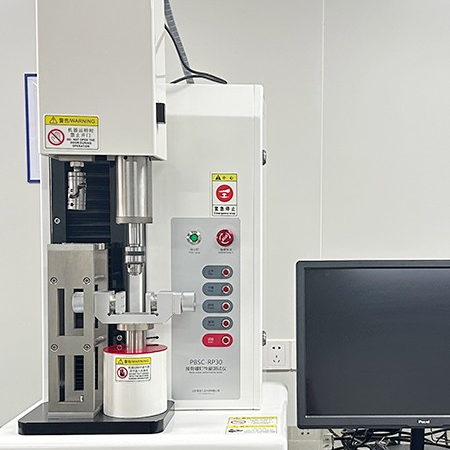
Tests the tensile strength, yield strength and elongation of materials. Simulates the tensile forces to which the implant is subjected in the body.
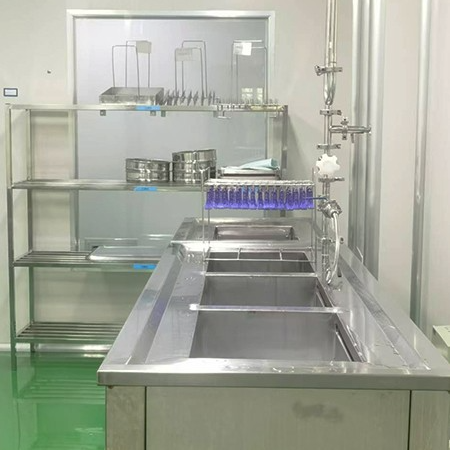
Cleaned implants have a cleaner surface, helping to reduce the risk of post-operative infection. Ensures that the implant is safer to apply to the patient during surgery.
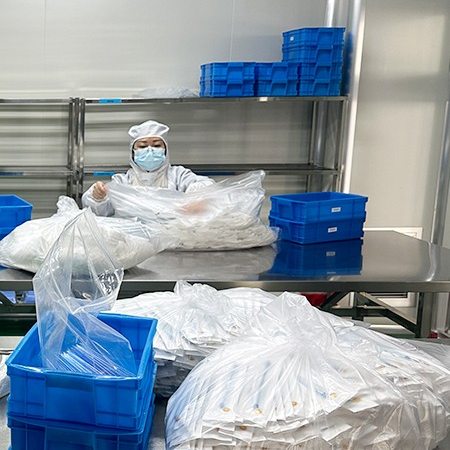
Packaging should ensure a good seal to prevent the entry of external contaminants. Use heat sealing, pressing or gluing to ensure the integrity of the package.
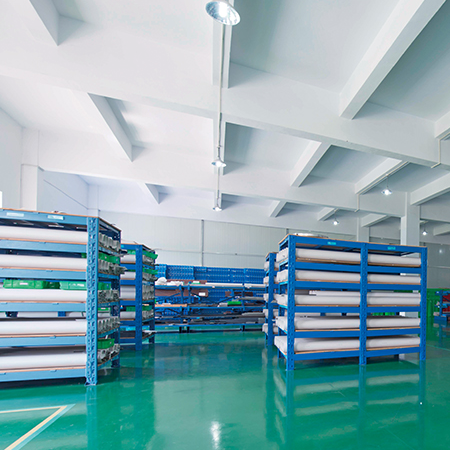
Our 15,000 ㎡ floor area is equipped with the latest technology to ensure high-volume production meets global quality standards.
In various clinical environments, the application of Spinal Hooks and Rods varies significantly. In pediatric scoliosis surgery, hooks provide a non-pedicle based fixation that is crucial for growing spines. Unlike screws, hooks can be placed on the laminae or transverse processes without risking the spinal canal in very young patients. Our pediatric spinal hooks are engineered with rounded edges and slim profiles to accommodate smaller anatomical structures while providing robust corrective force.
For adult degenerative conditions, rods are often pre-contoured or bent intraoperatively to restore natural lordosis. The interaction between the rod and the hook or screw head is vital; our "ultra-resilient" fixation systems feature a unique locking mechanism that prevents nut loosening—a common cause of hardware failure in the past. In traumatic fracture stabilization, the speed of application is key. Our instrumentation sets are designed for rapid assembly, allowing surgeons to stabilize the spinal column quickly and efficiently.
As we look toward the next decade, the integration of AI in preoperative planning will allow for patient-specific spinal rods. These rods will be pre-bent by robotic systems based on 3D CT scans, ensuring a perfect fit and reducing surgery time.成都 Medev is at the forefront of this digital shift, investing in R&D to bridge the gap between traditional mechanical engineering and digital health technology.
Furthermore, the exploration of new materials like Carbon-PEEK is underway. While titanium remains the gold standard, radiolucent materials allow for better visualization of bone fusion during follow-up X-rays and CT scans. Our manufacturing team is constantly testing these new polymers to ensure they meet the rigorous mechanical demands of spinal fixation.
Comprehensive options for complex spinal reconstructions.
 Medev Medical