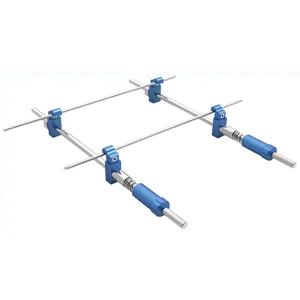
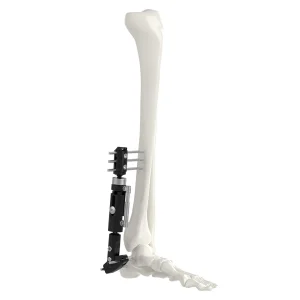
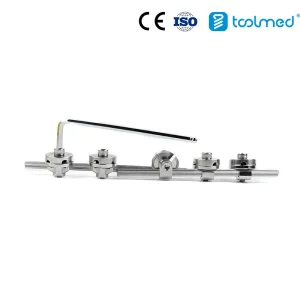
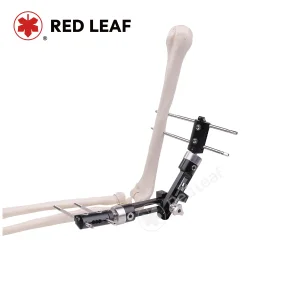
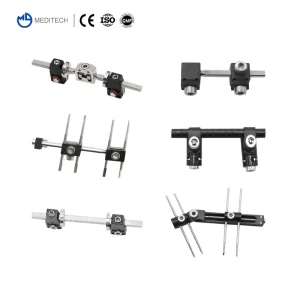
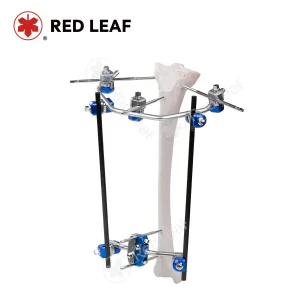
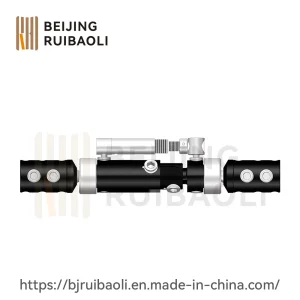
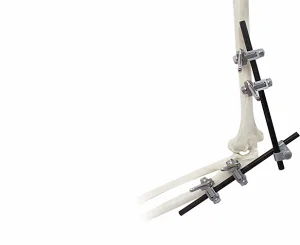
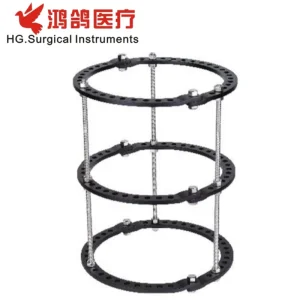
The global orthopedic trauma market is witnessing an unprecedented surge in demand for Linear External Fixators. As a primary method for stabilizing complex fractures, the commercial landscape has evolved from simple hardware to highly engineered biomechanical systems. Today, linear fixators are not just surgical tools; they are critical components in "Damage Control Orthopedics" (DCO), allowing surgeons to rapidly stabilize high-energy trauma patients before definitive internal fixation.
Industrial manufacturing of external fixation devices has shifted toward high-strength, lightweight materials. Hospitals and surgical centers in Europe and North America are increasingly seeking radiolucent components that allow for clearer X-ray and CT imaging during the healing process. Meanwhile, in emerging markets across Southeast Asia and Africa, the focus remains on durability, ease of application, and cost-effectiveness. As a leading Linear External Fixators manufacturer, we bridge these needs by offering modular designs that adapt to diverse surgical requirements.
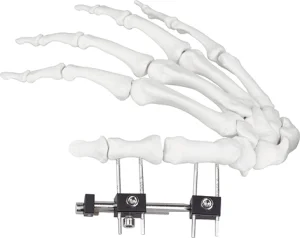
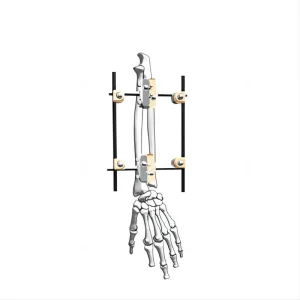
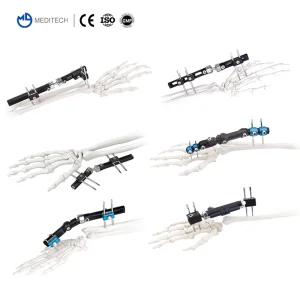
Our Universal Compression Extension Type mini fixators represent the pinnacle of small bone stabilization. Engineered for the complex anatomy of the hand and wrist, this device allows for precise distraction and compression, ensuring optimal bone alignment. The lightweight titanium alloy construction reduces patient discomfort while maintaining rigid stability.
Artificial Intelligence is beginning to play a role in preoperative planning. By using 3D modeling, manufacturers can now provide surgeons with optimized frame configurations tailored to specific fracture patterns.
The industry is moving away from basic stainless steel toward high-grade Titanium (Grade 5) and Carbon Fiber rods to minimize weight and maximize biocompatibility.
The trend of combining linear fixators with circular (Ilizarov) components is growing, providing the stability of a ring fixator with the ease of use of a linear system.
From battlefield medicine where rapid stabilization is life-saving, to pediatric clinics treating limb deformities, the application of linear fixators is vast. In high-traffic urban hospitals, they are used for "Temporary Fixation" to manage soft tissue swelling. In specialized orthopedic centers, they are utilized for "Limb Lengthening" and "Bone Transport" to treat non-union fractures and congenital defects.
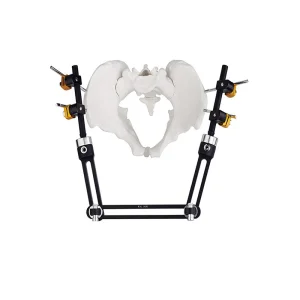
Pelvic fractures are among the most dangerous orthopedic emergencies. Our Pelvic External Fixator-Combination Three is designed for rapid deployment in emergency rooms. The robust clamping system provides immediate pelvic ring stability, which is crucial for controlling retroperitoneal hemorrhage and saving lives in trauma bays.
As a premier Linear External Fixators factory based in Chengdu, China, we offer a unique blend of technological innovation and manufacturing efficiency. Chengdu is a growing hub for high-tech medical research, and our facility leverages this ecosystem to produce world-class orthopedic implants.
Our integrated supply chain and advanced automation allow us to offer competitive pricing that helps hospital procurement departments manage budgets without sacrificing patient outcomes.
Every single linear fixator undergoes rigorous testing. We don't just manufacture; we engineer safety. Our 15,000 ㎡ floor area is equipped with the latest diagnostic and cleaning machinery.
Chengdu Medev Medical Instruments Co., Ltd., Ltd was founded in 2001, covers an area of 18,000 ㎡ , including a floor area of over 15,000 ㎡ . Its registered capital reaches 20 million Yuan. which is specialized in product research, design and manufacturing of orthopedic implant instruments. As the leader in orthopedic implants and instruments manufacturing, We have been successfully supplying to 1000+ clients in 120+ countries for over 20 years thanks to extensive know-how and expertise. We adhere to the ‘people-oriented, integrity first, continuous innovation, the pursuit of excellence,’ the concept of guarding human health!
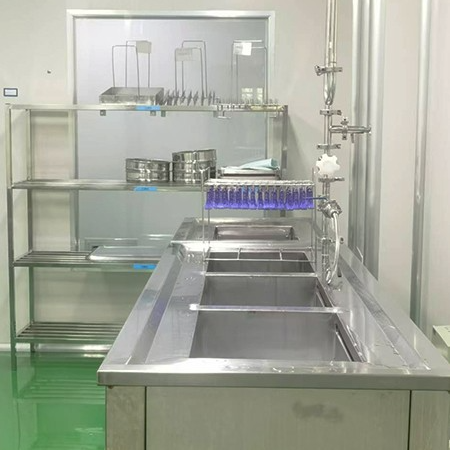
Cleaned implants have a cleaner surface, helping to reduce the risk of post-operative infection. Ensures that the implant is safer to apply to the patient during surgery.
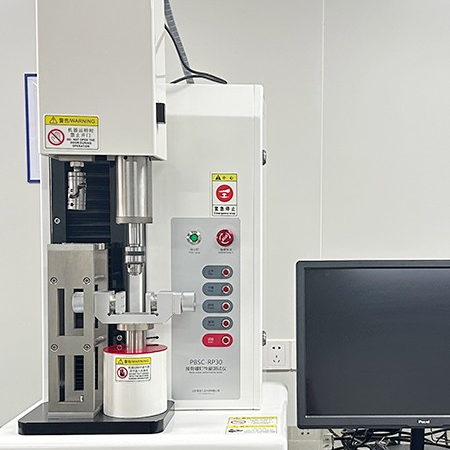
Tests the tensile strength, yield strength and elongation of materials. Simulates the tensile forces to which the implant is subjected in the body.
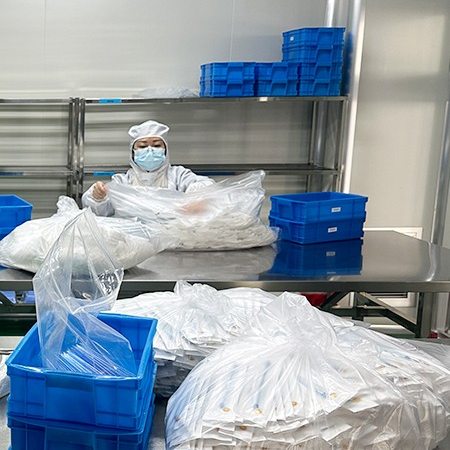
Packaging should ensure a good seal to prevent the entry of external contaminants. Use heat sealing, pressing or gluing to ensure the integrity of the package.
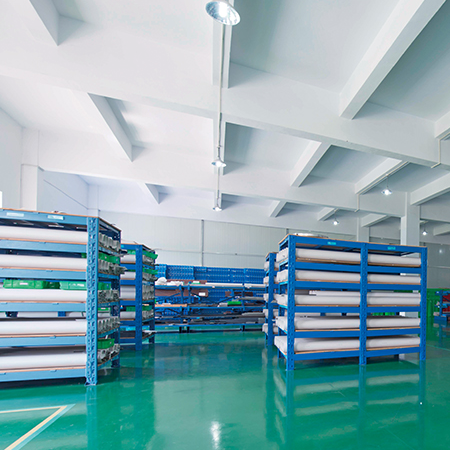
Medical procurement officers and distributors worldwide face the challenge of balancing quality certifications with lead times. Our factory addresses these needs through:
Whether you are a government health department looking for trauma kits or a private surgical clinic needing specialized Linear External Fixators, Chengdu Medev provides the industrial scale and individual attention required for modern medical supply chains.
 Medev Medical