Orthopedic implants may spend months in storage, then face vibration, compression, humidity, and hurried handling before surgery. Packaging must protect more than a polished titanium surface. It must preserve sterility, identification, traceability, and safe presentation at the operating table.
What is the role of packaging in orthopedic implants quality? ISO 11607-1:2019 treats packaging as part of the sterile barrier system, not merely an outer container. ASTM F1980 also guides accelerated aging studies, helping manufacturers estimate package integrity throughout shelf life. These requirements matter as the market expands. Grand View Research valued the global orthopedic devices market at approximately USD 47 billion in 2023. More implants mean more transport routes, storage conditions, and opportunities for damage.
“Packaging is part of the device, not an afterthought,” says William A. Wenzel, a medical-device packaging specialist. His point is practical. A torn pouch, crushed corner, or unreadable label can compromise confidence before implantation, even when the implant itself remains visually perfect. Perhaps this is where manufacturers still underestimate risk.
Reports from Smithers on medical-device packaging trends emphasize sterile barrier performance, validation, and sustainability. However, sustainability cannot justify weaker protection. A lighter tray is valuable only when it survives real distribution conditions. Packaging engineers therefore test seal strength, microbial barrier performance, drop resistance, and aging behavior.
Small details matter. A sharp implant edge can puncture a pouch. Condensation can obscure labels. A rushed opening sequence can touch the sterile field.
Quality is not proven by appearance alone. It is demonstrated through evidence, repeatable testing, documented controls, and honest review of failures.
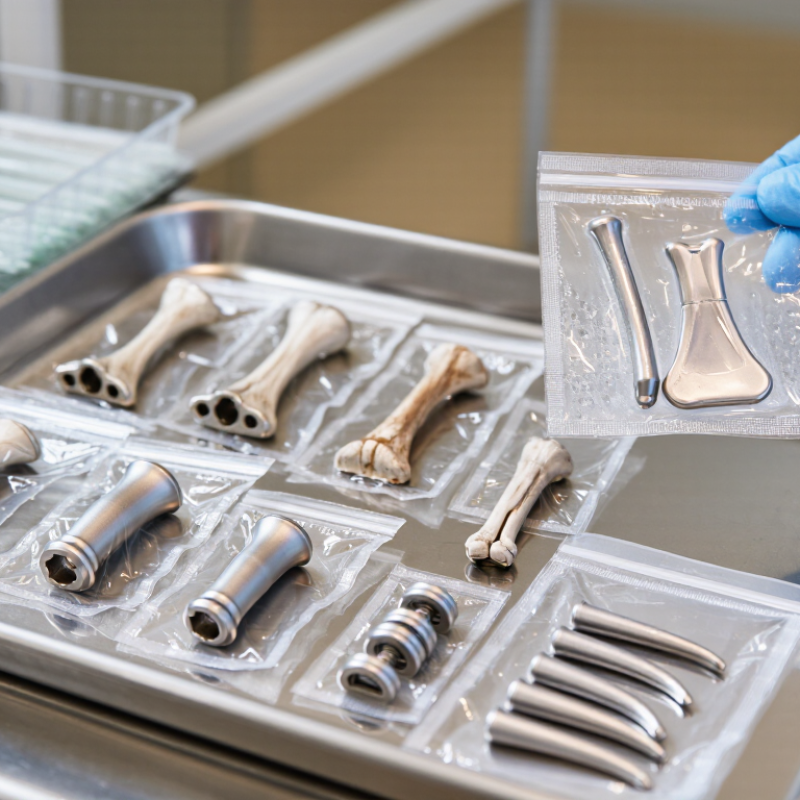
Orthopedic implant packaging is more than a protective shell. It is part of the implant’s quality system. The package must preserve cleanliness, sterility, and physical condition from manufacturing to clinical use.
Moisture is a serious risk. It can support corrosion, weaken labels, or damage sensitive materials. Fine particles may settle on an implant surface and create avoidable contamination concerns. Strong packaging barriers help block dust, humidity, and microorganisms. They also protect against oxygen exposure when material stability requires it.
Impact protection matters too. A sealed tray may look intact while an implant shifts inside during transport. Drops, vibration, and compression can cause scratches, deformation, or hidden seal damage. Cushioning, rigid supports, and controlled internal spaces reduce these risks. Temperature changes deserve attention as well. Repeated heating and cooling can stress seals and packaging layers.
Packaging also protects against human error. Clear identification, readable instructions, and secure compartment design help prevent mix-ups. Traceability details support quality checks when questions arise. Small failures matter.
No package is invincible. A design may perform well in testing but behave differently after long storage or rough handling. That gap deserves honest review. Packaging inspections should include seal checks, visual examination, and realistic distribution testing. When packaging remains intact, the implant has a better chance of reaching the operating room in its intended condition.
Packaging is the first protective layer around an orthopedic implant. It must preserve sterility from final sterilization through hospital opening. The World Health Organization’s Global Guidelines for the Prevention of Surgical Site Infection report an average infection incidence of 11.8 cases per 100 operations in low- and middle-income countries. Packaging cannot prevent every infection. However, a damaged sterile barrier can introduce an avoidable risk.
ISO 11607-1 and ISO 11607-2 require packaging systems to undergo seal, integrity, aging, and distribution validation. These tests examine vibration, compression, drops, and temperature changes. A small puncture may be invisible, yet moisture can reach the implant. That matters for porous coatings, titanium surfaces, and polymer components.
Corrosion, oxidation, deformation, or particles may compromise performance before use. The U.S. Centers for Disease Control and Prevention estimates that one in 31 hospitalized patients has a healthcare-associated infection on any given day. That figure is not specific to orthopedic surgery, but it shows why contamination controls deserve attention. Packaging teams should also inspect seal width, peel behavior, and package appearance after simulated transport.
The weak assumption is that an intact outer carton proves sterility. It does not. Handling records, storage humidity, and opening technique still require review.
Effective implant packaging begins with a clear understanding of real handling conditions. A sterile barrier must protect the implant from moisture, dust, and microorganisms. It must also resist vibration, compression, and accidental drops during transport. Packaging engineers assess seal strength, material compatibility, and opening performance through documented testing. Small details matter. A rough edge can damage a pouch or complicate aseptic presentation.
Tips: Use layered protection when needed. Separate delicate surfaces from hard edges. Add clear labels for implant size, lot number, expiration date, and sterilization status. Make opening steps obvious. Staff should not need excessive force or sharp tools. Human factors testing can reveal problems that laboratory testing misses.
Packaging design should support traceability without creating visual confusion. Labels need strong contrast, durable printing, and consistent placement. Internal supports should prevent movement, but they should not press against sensitive surfaces. Temperature and humidity studies can expose weaknesses before distribution. Still, no design is perfect. A package may perform well in testing yet frustrate users in a busy operating room. That gap deserves honest review and repeated improvement. Reliable quality comes from validated materials, controlled manufacturing, and feedback from clinical and logistics teams. Packaging is not merely a container. It is part of the implant’s quality system.
A sterile orthopedic implant can still fail before surgery if its package loses integrity. Packaging protects against moisture, particles, impact, and microbial entry. ISO 11607-1 requires the sterile barrier to maintain sterility until the point of use. It also requires documented compatibility between the implant, packaging materials, and sterilization process. FDA medical-device recall records repeatedly identify compromised seals and sterile-barrier damage as recurring failure causes. Small defects matter.
Testing should imitate real distribution conditions, not only a quiet laboratory shelf. ASTM D4169 and ISTA protocols evaluate vibration, compression, shock, and repeated drops. Seal-strength testing can reveal weak areas that visual inspection misses. Dye penetration, bubble-leak, and burst tests provide different evidence. No single test is enough. ASTM F1980 uses accelerated aging, commonly at 55°C, and a Q10 value of 2 for many polymer systems. That estimate is useful, but it is not universal.
Quality control must connect production data with clinical risk. Teams should record seal temperature, pressure, dwell time, lot numbers, and inspection results. Trend analysis may expose gradual drift before failure becomes obvious. Yet accelerated aging cannot fully reproduce years of storage, handling, and hospital conditions. That gap needs review. Human factors matter too: a difficult-to-open pouch may encourage unsafe handling, despite passing laboratory tests. Packaging decisions should therefore combine standards, measured evidence, and practical feedback from sterilization and operating-room personnel.
Orthopedic implants may be manufactured precisely, yet packaging protects that precision until surgery. A sterile barrier must resist punctures, seal failures, moisture, dust, and repeated handling. During transport, cartons face vibration, compression, drops, and temperature changes.
Small breach, serious risk.
A damaged tray or torn pouch can compromise sterility, labeling, and surgical confidence.
The WHO Global Patient Safety Report 2024 estimates that one in ten patients experiences harm during healthcare, with more than half considered preventable. Packaging cannot prevent every clinical error, but it can reduce avoidable contamination and identification risks. ISO 11607-1 requires packaging systems to maintain sterility until the point of use. ASTM distribution-testing methods also help evaluate vibration, impact, and compression before release. These standards support evidence-based decisions, not assumptions.
In storage, clear labels, protective inserts, and controlled humidity help staff locate and inspect implants safely. A clean-looking pouch can still hide seal damage. That is easy to miss.
Surgical teams should check indicators, package integrity, expiry information, and implant identification before opening. No package is perfect; real distribution is messier than a laboratory.
Therefore, manufacturers should combine transit simulation, seal-strength testing, aging studies, and practical user feedback. FDA quality-system guidance and ISO 11607 both support documented validation and ongoing monitoring. Packaging is part of care.
It helps block moisture, dust, microorganisms, oxygen, and physical damage during storage and transport.
Moisture may support corrosion, weaken labels, and damage sensitive materials. Dry conditions matter.
Yes. An implant may shift inside, causing scratches or deformation. A seal may look intact but fail.
Rigid supports, cushioning, and controlled spaces limit movement during drops, vibration, and compression.
Repeated heating and cooling can stress seals and packaging layers. Laboratory results may not show every problem.
Clear labels, readable instructions, secure compartments, and traceability details help prevent mix-ups.
Check seals, tears, punctures, indicators, expiry information, and implant identification. A clean pouch is not proof.
Use seal testing, aging studies, transit simulation, and realistic distribution checks. Real roads are messier than laboratories.
No package is invincible. Rough handling and long storage can expose weaknesses that testing missed. That deserves honest review.
Packaging plays a critical role in maintaining orthopedic implant quality from manufacturing through surgical use. What is the role of packaging in orthopedic implants quality? It protects implants from contamination, moisture, dust, impact, vibration, and other environmental risks that could affect sterility or material performance. Proper packaging also helps preserve the implant’s surface condition, dimensions, and functional properties during storage and transportation, reducing the possibility of damage before implantation.
Effective implant packaging is designed with secure seals, protective layers, suitable materials, clear identification, and handling features that support safe opening in the surgical setting. Its performance should be verified through appropriate testing, including seal integrity, aging, transportation simulation, and environmental resistance assessments. Consistent quality control ensures that every package meets defined requirements and remains reliable throughout its intended shelf life. By supporting organized storage, safe delivery, efficient preparation, and aseptic presentation, packaging contributes directly to patient safety and the dependable performance of orthopedic implants.

Medev Medical