An orthopedic implant’s purchase price tells only part of its economic story. A lower-cost knee component, hip stem, or fracture plate may reduce the initial bill, but long-term value also depends on clinical suitability, durability, and follow-up needs. Price tags can mislead. The most cost-effective option is not automatically the cheapest one; it is the option that supports a suitable outcome at a reasonable total cost.
How to find cost-effective orthopedic implants without compromising quality starts with clear comparisons. Patients and care teams can consider the implant’s intended use, available clinical evidence, material, expected service life, and the surgeon’s experience with that design. Hospitals may also assess purchasing costs, inventory requirements, and potential expenses related to complications or revision surgery. These factors should be weighed together, not treated as guarantees. Results can differ between patients, and no implant is right for every body or procedure.
Reliable decisions draw on more than a product brochure. Ask what evidence supports the implant, how its performance is monitored, and whether comparable options have meaningful differences. Clinical studies and registries can inform the discussion, though their findings may not apply equally to every patient. A thoughtful comparison may take time. That is worthwhile. Cost-effectiveness is a balance among quality, safety, clinical fit, and resources—and sometimes the available evidence leaves room for uncertainty.
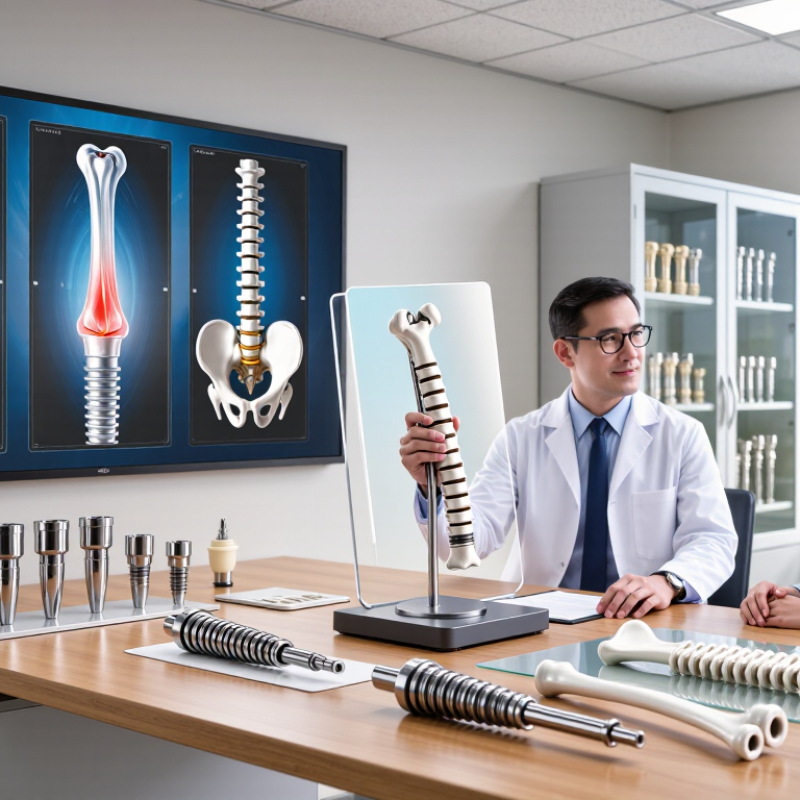
What Is the Most Cost Effective Orthopedic Implant?
Defining Cost-Effectiveness in Orthopedic Implants
Cost-effectiveness is not the lowest purchase price. It is the health gained for the total resources used. For an orthopedic implant, compare device cost, operating-room time, rehabilitation, complications, and possible revision over a defined period. Small differences matter. A higher upfront price may be worthwhile if reliable outcome data show fewer repeat surgeries. NICE’s 2022 health technology evaluation manual uses £20,000–£30,000 per quality-adjusted life year (QALY) as a reference range in England. This is a decision aid, not a universal price ceiling. Local budgets and patient priorities differ.
Registry reports provide a practical reality check. The American Joint Replacement Registry’s annual reports track real-world revision patterns and implant survivorship. These data can help test whether clinical results hold in routine care. Comparisons still need adjustment for age, diagnosis, and follow-up time. Compare like with like. Include surgeon experience, bone quality, and the cost of a painful failure. Models often assume recovery proceeds neatly. Many patients do not. That uncertainty matters. State the time horizon, revision assumptions, and who pays; otherwise, a precise-looking cost-per-QALY may conceal weak assumptions. Cost-effectiveness means outcomes worth their cost for a defined population—not simply the lowest quotation.
There is no single implant that is most cost-effective for every patient. Cost-effectiveness depends on the total cost of care, clinical outcomes, implant longevity, patient characteristics, and local pricing—not just the initial purchase price.
| Implant choice | Typical use | Relative initial implant cost | Cost-effectiveness considerations | Important limitations |
|---|---|---|---|---|
| Cemented total knee implant | Common fixation method for primary total knee replacement. | Often lower than cementless alternatives, but varies by hospital and contract. | A long-established option with extensive clinical experience; may offer good value when it provides durable results at a lower acquisition cost. | Suitability depends on bone quality, patient factors, surgical technique, and the specific implant system. |
| Cementless total knee implant | An alternative fixation approach, sometimes considered for patients with suitable bone quality. | May be higher than cemented fixation; actual prices are institution-specific. | Potential value depends on whether fixation and long-term outcomes justify any additional upfront cost. | Long-term results and suitability are not identical for all patients or implant designs; evidence should be assessed for the specific indication. |
| Cemented total hip implant | Often considered in patients with weaker bone, including some older adults. | Can have a lower component acquisition cost, although total procedure costs vary. | May be cost-effective when patient characteristics favor cemented fixation and it reduces the likelihood of costly complications or revision. | Clinical choice depends on age, bone quality, diagnosis, surgical factors, and the risks associated with cement use. |
| Cementless total hip implant | Commonly used when bone quality supports biological fixation. | May have a higher initial component cost; pricing varies substantially. | May provide good long-term value in appropriately selected patients if durable fixation avoids future procedures. | Not appropriate for every patient; bone quality and fracture risk are important considerations. |
| Highly cross-linked polyethylene bearing | Used as a bearing surface in many hip replacements. | May cost more than conventional polyethylene, depending on the implant system and contract. | Reduced wear compared with conventional polyethylene has been demonstrated in clinical studies; lower wear may help support implant longevity. | Lower wear does not guarantee fewer revisions for an individual patient; outcomes also depend on other implant and patient factors. |
| Ceramic-on-polyethylene hip bearing | A bearing option for total hip replacement. | Can be higher than some alternatives; the difference is not standardized. | May offer favorable wear characteristics, but cost-effectiveness depends on the price difference and expected clinical benefit. | Material choice should reflect patient needs, implant design, and evidence for the specific bearing combination. |
| Revision implant | Used to replace or support components during revision surgery. | Generally higher than a standard primary implant because of component complexity and case requirements. | Value is measured against the need to address loosening, infection, instability, fracture, or other failure—not against primary implant cost alone. | Revision procedures are more complex, and the appropriate components depend on the cause of failure and remaining bone and soft tissue. |
Plates and screws stabilize fractures. Rods support long bones, while joint components replace damaged surfaces. Spinal implants support selected areas, and small anchors attach soft tissue to bone.
They consider the diagnosis, bone quality, activity level, and personal goals. The device alone does not determine the outcome.
Not always. Compare the full care plan, including recovery, follow-up visits, and possible further treatment. The price tag tells only part of the story.
It varies with the implant, health, activity, bone quality, and surgical technique. No implant lasts forever. Ask how often similar devices need revision.
Checkups or imaging may help monitor an implant. Rehabilitation, travel, and follow-up visits can add practical costs.
New pain, swelling, or changes in mobility deserve attention. A small change in walking comfort can matter.
Yes. Running can place different demands on a joint than walking around the house. Ask whether available evidence reflects people with similar activity levels.
Ask what it is designed to do, how long it may last, and what restrictions or alternatives apply. Estimates are not guarantees, and recovery time is easy to overlook.
The most cost-effective orthopedic implant is not necessarily the one with the lowest purchase price. True value depends on the balance between upfront cost, expected lifespan, clinical performance, maintenance needs, and the likelihood of follow-up procedures. Common options include joint replacement components, fracture-fixation devices, spinal implants, and other devices designed for specific procedures. Each has different material, design, and care considerations that can influence its overall cost.
Evaluating an implant means considering the patient’s condition, activity level, anatomy, and the procedure’s goals, along with potential recovery and maintenance needs. Comparing long-term outcomes and durability can provide a clearer picture of value than price alone. How to find cost-effective orthopedic implants without compromising quality? Work with the clinical team to weigh safety, suitability, expected longevity, and total care costs, then choose the option that best fits the individual patient and procedure.

 Medev Medical