How to Choose Top Orthopedic Implants for Hand and Foot?

Time:2026-10-17 Author:Oliver
0%

Choosing a suitable implant can influence stability, movement, healing, and long-term comfort. Hand and foot procedures demand careful planning because these structures contain small bones, narrow joints, tendons, nerves, and changing load patterns. A device that works well in the wrist may not suit the ankle or forefoot.

This guide explains how to choose orthopedic implants for hand and foot procedures through a practical, evidence-informed approach. Surgeons typically assess bone quality, deformity, joint function, activity level, soft-tissue condition, and infection risk. Imaging helps reveal spacing, alignment, bone loss, and fixation challenges before surgery. Implant design also matters. Size, shape, fixation method, surface finish, and material can affect surgical handling and patient recovery.

Clinical experience remains valuable, but experience alone is not enough. Reliable decisions should combine peer-reviewed evidence, manufacturer documentation, regulatory compliance, and the surgeon’s judgment. Patient expectations must be discussed clearly. A manual worker, an athlete, and an older adult may need different solutions.

There is no perfect checklist.

Even well-designed implants can fail when patient factors, technique, or aftercare are overlooked. That uncomfortable reality deserves attention. This overview therefore considers both advantages and limitations, including potential loosening, stiffness, irritation, malalignment, and revision surgery. It also encourages readers to question broad claims and verify product data with qualified orthopedic specialists. Careful selection is not about choosing the most advanced implant. It is about matching the implant to anatomy, surgical goals, evidence, and the patient’s everyday needs.
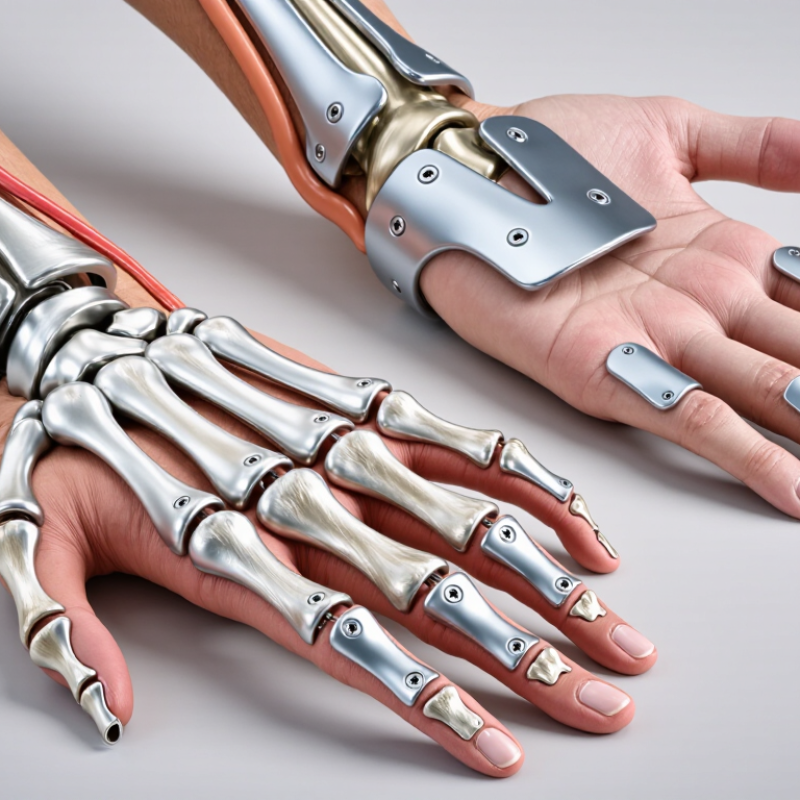
How to Choose Top Orthopedic Implants for Hand and Foot?

What Are Orthopedic Implants for the Hand and Foot?

Orthopedic implants for the hand and foot are medical devices that support damaged bones, joints, or soft tissues. Common examples include plates, screws, pins, wires, joint replacements, and small fixation anchors. Surgeons may use them after fractures, arthritis, deformities, or serious injuries. Their purpose is to restore alignment, maintain stability, and support safe movement during healing.

Hand and foot implants must match small bones, narrow spaces, and demanding daily movements. A plate may sit along a finger bone, while screws can hold a broken toe or metatarsal in position. Some joint implants replace worn surfaces and reduce painful contact. Material choice matters. Titanium and surgical steel are commonly considered because they provide strength and tissue compatibility. However, every implant has possible risks, including infection, loosening, stiffness, nerve irritation, or delayed healing. No implant is perfect.

Tips: Ask how the implant supports your specific bone or joint. Request an explanation of its size, material, and expected lifespan. Discuss weight-bearing limits, shoe choices, hand exercises, and follow-up imaging. Keep written instructions nearby. Recovery details are easy to forget. A second medical opinion may help when the procedure is complex. Most importantly, do not compare your implant with another patient’s device; anatomy and healing can differ greatly.

How Do Anatomy and Diagnosis Shape Implant Selection?

How to Choose Top Orthopedic Implants for Hand and Foot?

Anatomy and diagnosis should guide every orthopedic implant decision. The hand contains small joints, delicate tendons, and dense sensory nerves. The foot must also withstand body weight, impact, and repeated twisting. An implant suited for a finger may fail under the forces affecting the big toe. Size, shape, fixation method, and movement goals must match the specific bone and joint.

Diagnosis changes the plan even further. A traumatic fracture may require stable fixation while preserving natural motion. Arthritis may call for pain relief, alignment correction, or joint replacement. Bone loss, deformity, infection, and poor circulation can limit available choices. Imaging should assess more than the fracture line. It should show bone quality, joint surfaces, alignment, and nearby soft tissues. Sometimes, the obvious problem is not the main problem.

Patient habits matter too. A manual worker, a runner, and an older adult place different demands on an implant. Surgeons also consider healing capacity, activity level, previous operations, and realistic expectations. The smallest implant is not always the best implant. The strongest option may restrict movement. That trade-off deserves a careful discussion.

Clinical judgment is rarely perfect. Anatomy can look clear on a scan but behave differently during surgery. Diagnosis may also evolve after treatment begins. For that reason, experienced teams compare imaging, examination findings, and long-term function before selecting an implant. They should also explain possible revisions, recovery limits, and warning signs in plain language.

Which Implant Materials, Designs, and Sizes Best Fit the Case?

Choosing a hand or foot implant starts with the case, not the catalogue. Bone density, joint motion, soft-tissue coverage, infection risk, and daily loading all matter. Titanium alloys offer strength and generally good biocompatibility. PEEK may reduce stiffness mismatch, but its long-term fixation evidence remains less mature. Pyrocarbon can support motion in selected hand joints, while silicone remains useful when flexibility and simplicity outweigh anatomical precision.

Design changes performance. A low-profile implant may reduce tendon irritation around the hand. In the foot, a fixed-bearing design can provide stability, while a mobile-bearing option may preserve movement but demand stricter alignment. A 2023 review in Foot & Ankle Orthopaedics reported first metatarsophalangeal implant survival estimates ranging from 77% to 100%, depending on design and follow-up period. That spread is important. It shows why one “best” implant rarely exists.

Sizing requires more than a radiograph. Surgeons should compare calibrated imaging, bone quality, trial components, and the patient’s functional demands. Oversizing can restrict motion or irritate soft tissue. Undersizing may weaken fixation. The American Academy of Orthopaedic Surgeons emphasizes shared decision-making and patient-specific risk assessment in its clinical guidance. Sizing charts help, but they are not oracles. Even experienced teams can revise the plan after exposure reveals thinner bone or unexpected deformity. Industry evidence is growing, yet hand and foot data remain smaller and less consistent than hip and knee registry data.

How to Choose Top Orthopedic Implants for Hand and Foot? - Which Implant Materials, Designs, and Sizes Best Fit the Case?

Clinical Case Common Implant Category Common Material Options Design Features to Consider Typical Size Selection Factors Potential Advantages Important Limitations
Phalangeal or metacarpal fracture Mini-plate and screw system Titanium alloy; stainless steel may also be used Low-profile plate, fixed-angle or variable-angle locking holes, rounded edges, multiple screw trajectories Bone width, fracture location, available proximal and distal purchase, soft-tissue coverage Angular stability and resistance to rotational displacement; useful when bone quality is reduced Prominent hardware may irritate tendons; excessive stiffness or poor positioning can restrict motion
Small-joint arthrodesis of the hand Compression screw, headless screw, or fusion plate Titanium alloy or stainless steel Cannulated option, variable pitch, compression capability, countersunk or buried head Joint surface geometry, desired fusion angle, canal diameter, screw length and thread position Compression across the fusion site and reduced external prominence when fully buried Incorrect angle or length can affect function; excessive compression may compromise small bone fragments
Carpal or wrist ligament reconstruction Interference screw, anchor, or fixation pin Titanium alloy; bioabsorbable polymers may be available for selected indications Small diameter, secure suture or graft fixation, controlled insertion torque, minimal prominence Tunnel diameter, graft size, bone stock, insertion direction, distance from cartilage and neurovascular structures Can provide stable soft-tissue or graft fixation in confined anatomy Tunnel placement is technically demanding; fixation strength depends on bone quality and graft preparation
Hallux valgus correction Osteotomy plate, compression screw, or staple Titanium alloy; stainless steel for selected systems Anatomic contour, low profile, compression slot, locking and non-locking screw options Metatarsal width, osteotomy type, correction angle, cortical purchase, footwear-related prominence Supports osteotomy stability while permitting a compact construct Plate prominence may cause footwear irritation; implant choice does not replace correction planning
Midfoot or hindfoot arthrodesis Large-diameter compression screw, fusion plate, or combined construct Titanium alloy or stainless steel High-load capacity, locking support, multiple screw directions, compression capability, compatibility with bone grafting Weight-bearing load, bone density, fusion surface area, deformity correction, safe corridors for screw placement May improve construct stability in high-load regions and compromised bone Larger implants can irritate soft tissue; construct must be matched to alignment and postoperative loading protocol
Metatarsal or phalangeal fracture Foot mini-plate, intramedullary screw, or crossed screw fixation Titanium alloy and stainless steel are commonly used implant metals Low-profile contour, adequate screw density, compression option, resistance to bending and rotation Fracture pattern, canal diameter, bone length, load-bearing status, skin and tendon coverage Provides alignment control and fixation suited to small bones of the forefoot Hardware prominence and stiffness may be clinically relevant in thin soft-tissue areas
Calcaneal or complex hindfoot reconstruction Specialized plate, locking plate, or large compression screw Titanium alloy or stainless steel Three-dimensional contour, multidirectional locking, strong lateral or plantar support, radiographic visibility Calcaneal morphology, fracture fragments, soft-tissue condition, screw trajectory, weight-bearing demands Helps maintain reduction in anatomically complex, load-bearing bone Soft-tissue condition strongly influences timing and approach; imaging and intraoperative assessment are essential
Revision fixation or poor bone quality Locking plate, longer construct, supplemental screw, or bone-graft-supported fixation Titanium alloy or stainless steel, selected according to the surgical plan Fixed-angle locking, multiple fixation points, extended working length, compatibility with grafting Bone stock, previous tunnels or holes, defect size, alignment, available fixation zones Can reduce dependence on screw purchase in weak or damaged cortical bone Higher construct rigidity is not always desirable; biological healing factors remain critical
Size and material selection checklist:
  • Confirm implant dimensions against radiographs, CT images when appropriate, and intraoperative trial fitting.
  • Select the smallest implant that provides adequate stability without compromising fixation or soft-tissue safety.
  • Consider bone quality, expected loading, fracture or fusion geometry, soft-tissue coverage, and the need for future removal.
  • Verify compatibility among screws, plates, instruments, and imaging equipment before surgery.
  • All dimensions and indications must be checked against the applicable implant instructions for use and the treating surgeon’s clinical judgment.

How Can Safety, Durability, and Compatibility Be Evaluated?

Choosing a hand or foot implant requires more than checking its material or price. Safety begins with biological compatibility, sterilization controls, and evidence from mechanical testing. ISO 10993 guidance evaluates risks such as irritation, sensitization, and systemic toxicity. FDA orthopedic-device guidance also emphasizes fatigue, wear, corrosion, and fixation testing. These checks matter when a small implant faces repeated gripping, walking, or twisting forces.

Clinical data should be read carefully. The World Health Organization reports that surgical-site infections affect about 11% of surgical patients in low- and middle-income countries. This figure is not specific to implants, but it shows why sterile handling and wound monitoring deserve equal attention. The National Joint Registry’s 2024 report tracks revision surgery across millions of joint procedures, using revision risk as a key performance measure. Hand and foot devices need similar long-term follow-up, although registry coverage remains less complete. That gap should make buyers cautious.

Compatibility includes anatomy, bone quality, imaging visibility, and the surgeon’s technique. A plate that fits a model bone may irritate soft tissue in a real patient. A polished surface does not guarantee durability. Ask for fatigue-test conditions, coating data, adverse-event records, and follow-up beyond the first year. Also check whether the implant works with commonly available instruments. I would not accept a low revision rate without knowing the patient population and follow-up period. Data can look reassuring while hiding missing cases.

How to Choose Top Orthopedic Implants for Hand and Foot?

Material selection should balance safety, durability, and compatibility. The chart compares representative room-temperature ranges commonly reported for implant materials used in orthopedic applications. Higher tensile strength supports load resistance, while a lower elastic modulus may reduce stiffness mismatch with bone.

Representative midpoint values: tensile strength in MPa and elastic modulus in GPa. Actual performance depends on alloy condition, implant geometry, surface treatment, sterilization, fixation method, and clinical loading.

How Should Manufacturers, Surgical Planning, and Follow-Up Be Compared?

How to Choose Top Orthopedic Implants for Hand and Foot?

Manufacturers deserve comparison beyond catalogue images and polished claims. Review implant materials, fatigue testing, sterilization controls, and batch traceability. Ask for peer-reviewed clinical evidence, not only laboratory results. ISO 13485 certification supports quality systems, but it does not prove superior clinical outcomes.

1.71 billion people live with musculoskeletal conditions worldwide. Demand is substantial. Evidence must remain specific to the joint, anatomy, and patient activity. A strong manufacturer also shares revision data and adverse-event monitoring openly.

The Global Burden of Disease 2019 study estimated that 1.71 billion people live with musculoskeletal conditions worldwide. Demand is substantial. Evidence must remain specific to the joint, anatomy, and patient activity. A strong manufacturer also shares revision data and adverse-event monitoring openly.

Surgical planning should be compared through practical detail. Does the team use weight-bearing radiographs, CT, or three-dimensional models when anatomy is complex? Can the plan address bone loss, tendon balance, soft-tissue tension, and future revision?

Patient-specific guides may improve positioning, but they cannot replace surgical judgment. This is where attractive technology can mislead. The American College of Radiology emphasizes choosing imaging according to clinical need, not routine habit.

Planning records should show implant sizing, alignment targets, and a documented alternative.

Follow-up separates a usable implant from an impressive operation. Compare scheduled reviews, wound checks, radiographs, functional scoring, and return-to-work guidance. The National Joint Registry’s 21st Annual Report demonstrates the value of long-term tracking across millions of replacements, although its hip and knee data cannot be copied directly to hand or foot surgery.

Capture pain, motion, grip or walking ability, and patient-reported outcomes. Patients sometimes improve slowly. That matters.

A weaker plan may still look successful at six weeks, while loosening, stiffness, or transfer pain appears later.

FAQS

What are orthopedic implants for the hand and foot?

They are medical devices supporting damaged bones, joints, or soft tissues. Examples include plates, screws, pins, wires, anchors, and joint replacements. They can restore alignment and stability. Healing still takes time.

When might someone need a hand or foot implant?

Surgeons may consider implants after fractures, arthritis, deformities, or serious injuries. The goal may involve pain relief, alignment, or safer movement. The diagnosis matters greatly. One solution cannot fit every case.

How does anatomy affect implant selection?

Hand bones are small, with nearby tendons and sensitive nerves. Feet carry body weight and repeated impact. An implant suitable for a finger may fail in the big toe. Small spaces create little room for error.

Which materials may be used?

Common choices include titanium alloys, surgical steel, silicone, pyrocarbon, and PEEK. Each material offers different strength, flexibility, and tissue compatibility. Evidence is not equally strong for every material. The newest option is not automatically better.

How do surgeons choose the implant size?

They review imaging, bone quality, joint movement, and soft-tissue coverage. Trial components can help confirm the fit during surgery. An oversized implant may restrict movement or irritate tendons. An undersized implant may weaken fixation. Charts cannot predict everything.

Does implant design affect movement and stability?

Yes. A low-profile hand implant may reduce tendon irritation. A fixed design can provide strong foot stability. A mobile design may preserve movement but require accurate alignment. Every advantage has a trade-off.

What personal factors influence the decision?

Activity level, work demands, age, circulation, healing capacity, and previous operations all matter. A runner and a manual worker may need different functional priorities. Expectations should remain realistic. Perfect results are not guaranteed.

What risks should patients discuss?

Possible risks include infection, loosening, stiffness, nerve irritation, and delayed healing. Some patients may later need revision surgery. Warning signs and follow-up imaging should be explained clearly. Recovery details are easy to forget.

What questions should patients ask before surgery?

Ask about the implant’s size, material, expected lifespan, and movement goals. Discuss weight-bearing limits, footwear, hand exercises, and follow-up visits. A second opinion may help with complex procedures. Do not compare devices without comparing anatomy.

Conclusion

Choosing the right orthopedic implant for the hand or foot requires a careful, case-specific process. The surgeon should first consider the patient’s anatomy, diagnosis, activity level, bone quality, soft-tissue condition, and treatment goals. These factors help determine whether an implant is needed for fracture fixation, joint reconstruction, deformity correction, or stabilization. Implant materials, surface characteristics, shape, strength, flexibility, and available sizes should then be matched to the surgical site and expected mechanical demands.

To understand how to choose orthopedic implants for hand and foot procedures, clinicians should also evaluate safety, durability, biological compatibility, ease of placement, and imaging requirements. Reliable manufacturing quality and precise surgical planning are essential for achieving stable alignment and functional recovery. Patient education, routine follow-up, and monitoring for healing, implant performance, and potential complications further support long-term outcomes. A balanced decision should always prioritize individual anatomy, evidence-based surgical judgment, and the patient’s recovery needs.

Oliver

Oliver

Oliver is a seasoned marketing professional with a wealth of expertise in driving brand awareness and engagement. With a deep understanding of our company's product offerings, he consistently delivers high-quality content that enriches our professional blog. His insights not only shed light on......