China Top 10 Orthopedic Implant Suppliers What Affects Cost?

Time:2026-10-12 Author:Aria
0%

China Top 10 Orthopedic Implant Suppliers: What Affects Cost?

Orthopedic implants are not ordinary metal products. They combine biomaterials, precision machining, clinical evidence, sterilization, and long-term monitoring. The World Health Organization reports that approximately 1.71 billion people live with musculoskeletal conditions worldwide. This expanding need increases both production pressure and purchasing scrutiny.

So, What factors affect the cost of orthopedic implants? Material selection is one clear factor. Titanium, cobalt-chromium alloys, ceramics, and ultra-high-molecular-weight polyethylene carry different prices and manufacturing risks. Design complexity also matters. A porous-coated hip stem may require additive manufacturing, advanced inspection, and strict control of surface quality. Regulatory testing, clinical studies, patents, packaging, sterilization, logistics, and distributor margins add further costs. These details are easy to overlook.

China’s National Healthcare Security Administration reported an average price reduction of about 82% after national volume-based procurement for artificial hip and knee joints in 2021. The result shows purchasing power can reshape prices quickly. However, the lowest quotation may not represent the lowest lifetime cost. Revision rates, instrument compatibility, surgeon training, inventory support, and warranty response still deserve attention. A cheaper implant can become expensive when service is weak.

Harvard professor Michael E. Porter offers a useful standard: “Value in health care is measured by the outcomes achieved, not the volume of services delivered.” This principle should guide comparisons among China’s leading orthopedic implant suppliers. Price matters, but evidence, manufacturing consistency, regulatory reliability, and patient outcomes matter more. Some cost comparisons remain imperfect. That is precisely why transparent supplier evaluation is necessary.
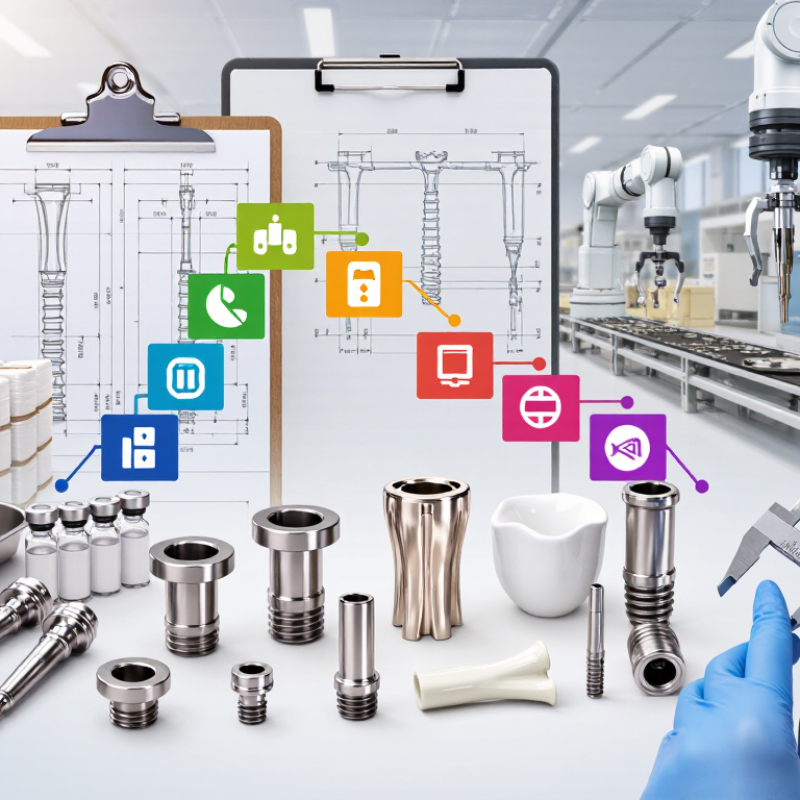
China Top 10 Orthopedic Implant Suppliers What Affects Cost?

China’s Top 10 Orthopedic Implant Suppliers: Market Overview

China’s top 10 orthopedic implant suppliers reflect a broad and increasingly specialized market. They manufacture products for trauma care, joint replacement, spinal surgery, and sports medicine. The strongest suppliers usually combine in-house machining, clean-room assembly, inspection laboratories, and clinical support. Their experience often appears in surgeon training, hospital partnerships, and documented product improvements.

A useful market overview should examine more than production volume. It should compare material control, design capability, sterilization processes, and traceability. Titanium alloys, cobalt-chromium, stainless steel, and advanced polymers can produce different cost structures. Complex joint systems require tighter tolerances and more testing. Large orders may reduce unit costs, but customized instruments can increase them quickly. Regulatory registration, quality audits, packaging, logistics, and after-sales service also affect the final quotation.

Cost is not a simple ranking metric. A low initial price may hide longer validation work or limited technical support. This matters. Buyers should request batch records, inspection standards, warranty terms, and evidence of clinical use. Supplier performance should be checked through audits and sample evaluation, not brochures alone. A ranking is never perfectly neutral; it may favor scale over responsiveness. Smaller specialized manufacturers can sometimes provide faster engineering feedback, although their capacity may be less predictable. Careful comparison remains essential when selecting suppliers for hospitals, distributors, or long-term procurement programs.

Key Product Categories in China’s Orthopedic Implant Industry

China’s orthopedic implant industry serves several distinct product categories.

Trauma fixation includes plates, screws, nails, and external fixation components.

Joint replacement covers hip, knee, and shoulder implants.

Spine products include cages, screws, rods, and interbody systems.

Sports medicine adds anchors, interference screws, and small repair devices.

Each category carries different design, testing, and production demands.

Cost depends heavily on material choice and manufacturing precision. Titanium alloys may raise prices but offer useful strength and corrosion resistance. Joint implants require accurate surfaces, stable bearing materials, and strict dimensional control. Spine systems often cost more when they include complex instruments or multiple sizes. Packaging, sterilization, inventory levels, and after-sales training also influence the final quotation. The cheapest option is rarely the simplest decision.

From practical supplier reviews, I would request batch traceability, quality certificates, inspection records, and clear implant specifications. Clinical evidence matters, especially for high-load joint and spine applications. A low price may reflect efficient production, but it may also exclude instruments, delivery, or technical support. This is easy to miss. Comparisons can remain imperfect because hospitals value different surgical workflows. A purchasing team should check anatomy coverage, revision needs, and surgeon familiarity before judging cost alone. Supplier data also deserves independent verification.

How to Evaluate China’s Orthopedic Implant Suppliers

Choosing among China’s orthopedic implant suppliers requires more than comparing catalog prices. Evaluate the supplier’s manufacturing experience, quality system, and documented product history. A reliable supplier should provide ISO 13485 certification, material certificates, sterilization records, and batch traceability. Ask how titanium, cobalt-chromium, or polymer components are inspected before shipment.

Request evidence from independent testing where appropriate. Review dimensional reports, fatigue testing, packaging validation, and complaint-handling procedures. Supplier audits can reveal practical details, such as cleanroom discipline, calibration labels, and how rejected parts are isolated. Export experience also matters, but it should not replace technical verification. A polished catalog is not proof.

Tips: Ask for a factory video call, then request matching records for one sample batch. Compare quoted costs with tooling, testing, packaging, documentation, and after-sales support. Confirm communication responsibilities before placing an order. Delayed answers can become expensive later.

Speak with the supplier’s quality manager, not only a salesperson. Check whether design changes require written approval and updated documentation. Review production capacity during peak periods, because rushed output may affect inspection consistency. Independent clinical or regulatory review may also be necessary for your target market. Requirements differ by country. Do not assume one certificate satisfies every market.

Some evaluations remain imperfect. A short factory visit cannot reveal every process weakness. Still, structured questions and traceable evidence reduce uncertainty. Look for clear answers, consistent records, and a willingness to discuss limitations.

China’s Orthopedic Implant Supplier Evaluation: Main Cost Drivers

This planning model ranks the factors that commonly influence orthopedic implant sourcing costs in China. The 1–5 score reflects relative cost sensitivity: 1 means lower influence and 5 means higher influence. Material grade, manufacturing complexity, regulatory evidence, quality systems, testing, tooling, and logistics should all be verified during supplier assessment.

The scores are normalized procurement-planning values rather than supplier quotations or market prices. Actual costs vary by implant type, production volume, customization, destination market, and compliance requirements.

Main Factors That Affect Orthopedic Implant Costs

China Top 10 Orthopedic Implant Suppliers: What Affects Cost?

Main Factors That Affect Orthopedic Implant Costs

Orthopedic implant pricing begins with materials, design, and manufacturing controls. Titanium alloys, cobalt-chromium, and advanced polymers carry different costs. Porous surfaces require specialized production and strict quality inspection. Complex instruments also increase the final quotation. The implant is only one part of the bill.

Regulatory work matters. Testing, traceability, sterilization, and clinical evidence require time and trained staff. The 2024 OECD Health at a Glance report shows major differences in healthcare labor and hospital spending across countries. These differences affect surgery fees, logistics, and after-sales support. Import duties, currency changes, and shipping conditions can shift prices quickly. A quote may look attractive at first.

Hospital payment systems add another layer. The CMS FY2025 Inpatient Prospective Payment System rule explains that hospital payments vary with wage indexes, teaching status, and case complexity. Therefore, two hospitals may pay different amounts for similar procedures. Volume contracts can lower unit prices, but small orders often increase packaging and inventory costs. I once viewed supplier price as the main comparison point. That was too simple. Long-term costs may rise through training, instrument replacement, revision surgery, or delayed delivery. Buyers should compare documented quality, service response, product life, and total procedure cost, not only the catalog figure. Some estimates remain uncertain. Real-world surgical data can change the decision.

China Top 10 Orthopedic Implant Suppliers: What Affects Cost?

No. Main Cost Factor How It Affects Cost Typical Cost Influence Cost-Control Considerations
1 Implant Type and Clinical Application Hip, knee, spine, trauma, sports-medicine, and dental implants require different designs, materials, instruments, and validation processes. The product category is one of the largest determinants of the final price. Complex systems generally cost more than standard fixation products. Compare products within the same anatomical application and indication rather than comparing unrelated implant categories.
2 Material and Material Grade Common materials include titanium alloys, cobalt-chromium alloys, stainless steel, ultra-high-molecular-weight polyethylene, PEEK, and ceramic components. Material cost, machinability, surface treatment, wear resistance, and biocompatibility can substantially change manufacturing cost. Confirm the exact material standard, grade, coating, and sterilization compatibility before comparing quotations.
3 Design Complexity and Customization Patient-specific implants, porous structures, complex locking mechanisms, modular components, and large size ranges require additional engineering and production work. Customized and highly engineered products normally have higher unit costs than standardized implants. Use standardized sizes when clinically appropriate and request a clear breakdown of tooling, engineering, and customization charges.
4 Manufacturing Process and Precision CNC machining, additive manufacturing, forging, casting, polishing, porous coating, and precision inspection each add process and quality-control requirements. Tighter tolerances and additional finishing steps increase labor, machine time, inspection, and scrap costs. Evaluate the required tolerances and surface specifications against the intended clinical use.
5 Regulatory Approval and Quality System Regulatory submissions, clinical evidence, risk management, design controls, traceability, and quality-system audits are built into the product cost. Products supplied to highly regulated markets usually require more documentation, testing, and post-market surveillance. Verify applicable registration, ISO 13485 quality certification, technical documentation, and market authorization.
6 Testing, Validation, and Sterilization Mechanical, fatigue, wear, biocompatibility, packaging, shelf-life, and sterilization validation may be required before commercial supply. Higher testing requirements increase non-recurring development expenses and may raise the unit price at lower production volumes. Clarify whether the quotation includes sterilization, sterile packaging, validation, and required test reports.
7 Order Volume and Production Scale Large, repeat orders allow fixed tooling, inspection, and setup costs to be distributed across more units. Small batches and sample orders generally have higher per-unit costs than stable production orders. Request tiered pricing for sample, annual, and forecasted volumes, while checking minimum order quantities.
8 Instrumentation and Surgical Accessories Many implant systems require dedicated trial components, guides, instruments, trays, sterilization containers, and maintenance support. The total system cost can be much higher than the implant-only quotation when instruments are purchased or provided separately. Request separate prices for implants, reusable instruments, disposable accessories, trays, repairs, and replacement parts.
9 Packaging, Logistics, and Import Costs Packaging validation, freight, insurance, customs duties, taxes, warehousing, currency exchange, and local distribution affect landed cost. The delivered price may be significantly higher than the factory or ex-works price, especially for small international shipments. Compare quotations on the same Incoterm and calculate the complete landed cost in the destination country.
10 Distribution, Training, and After-Sales Support Local distributors, surgeon training, inventory consignment, technical service, warranty handling, and product education may be included in the commercial model. A broader service package can increase the purchase price but may reduce implementation, inventory, and support risks. Assess total cost of ownership, including training, inventory requirements, service response time, and warranty terms.

Note: Orthopedic implant prices vary by product category, regulatory market, order quantity, contract terms, and whether instruments, sterilization, logistics, and distributor services are included. The factors above are general purchasing considerations and should be evaluated using comparable quotations and the applicable local regulations.

Quality, Certification, and Purchasing Considerations

Cost comparisons among China’s top orthopedic implant suppliers should begin with evidence, not catalog prices. Material grade, machining tolerance, sterilization, packaging, and batch testing can change the final quotation. Grand View Research estimated the global orthopedic implants market at about USD 47.4 billion in 2023. That scale attracts capable factories, but it also complicates supplier screening. Prices are not perfectly comparable. An implant with a lower unit price may require more inspection, validation, or clinical documentation.

Quality evidence should be specific. Ask for ISO 13485 certification scope, audit status, device history records, traceability procedures, and nonconformance data. Certification alone is not clinical proof. The FDA’s February 2024 Quality Management System Regulation confirms ISO 13485:2016 alignment for U.S. manufacturers from February 2, 2026. However, it does not replace regulatory clearance or local registration. Request sterilization validation, biocompatibility reports, mechanical test methods, and change-control records. Unreadable reports are warning signs. A polished certificate can still hide weak lot-level traceability.

Purchasing decisions should calculate landed cost, not only factory cost. Include tooling, minimum order quantities, freight, customs, inspection, recalls, and training. OECD’s Health at a Glance 2023 documents wide international variation in hip and knee replacement activity. That variation affects forecast volumes and inventory risk. Small orders may raise prices, yet excessive stock can create expiry and storage losses. Supplier interviews, sample inspections, and corrective-action plans reduce uncertainty. Still, no checklist removes every clinical or supply-chain risk. That uncomfortable gap deserves a budget.

FAQS

What products do leading orthopedic implant suppliers usually manufacture?

They commonly produce trauma implants, joint replacements, spinal devices, and sports medicine products. Some also supply surgical instruments.

Which manufacturing capabilities should buyers examine?

Look for controlled machining, clean-room assembly, inspection laboratories, and reliable sterilization processes. Traceability should follow each batch.

Which materials commonly affect implant pricing?

Titanium alloys, cobalt-chromium, stainless steel, and advanced polymers have different costs. Material choice also affects testing and machining requirements.

Why can complex implants cost more?

Joint systems often require tighter tolerances, specialized instruments, and additional testing. Porous surfaces may need advanced production controls.

Does the lowest quotation represent the best value?

Not always. A low price may exclude training, validation, replacement instruments, or technical support.

What documents should buyers request from suppliers?

Request batch records, inspection standards, sterilization details, warranty terms, and clinical-use evidence. Ask for clear traceability.

How can buyers compare supplier quality beyond brochures?

Conduct factory audits, inspect samples, and review documented product improvements. Speak with clinical and engineering contacts when possible.

How do order volume and customization change costs?

Large orders may reduce unit costs. Customized instruments, small batches, packaging, and inventory can increase the final quotation.

Why can two hospitals pay different prices for similar procedures?

Hospital payment systems vary by location, staffing costs, teaching status, and case complexity. Logistics and import charges may also differ.

Are supplier rankings completely objective?

No ranking is perfectly neutral. Scale may receive more attention, while smaller specialists can offer faster engineering feedback. Capacity may be less predictable.

Conclusion

China’s orthopedic implant industry offers a broad range of products, including joint replacement systems, trauma fixation devices, spinal implants, sports medicine products, and related surgical instruments. This overview explains how to assess orthopedic implant suppliers by reviewing product quality, manufacturing capabilities, technical support, regulatory documentation, delivery reliability, and after-sales service. Buyers should also consider whether a supplier can provide stable production, customized solutions, transparent communication, and complete traceability throughout the purchasing process.

What factors affect the cost of orthopedic implants? Key influences include raw material selection, product design and complexity, manufacturing technology, research and development investment, quality-control procedures, certification requirements, packaging, logistics, and order volume. Import duties, hospital procurement policies, surgeon preferences, and the level of technical support may also affect the final price. A lower quotation does not always represent better value, so purchasers should balance cost with safety, performance, compliance, supplier reliability, and long-term service. Careful comparison and proper documentation can help buyers make informed and responsible sourcing decisions.

Aria

Aria

Aria is a dedicated marketing professional with a deep passion for innovative strategies and a keen understanding of our company's product offerings. With a wealth of experience in the industry, Aria excels at crafting engaging content that highlights the unique features and benefits of our......