In 2026, choosing an orthopedic implant is not simply a contest between “custom” and “standard.” It is a decision about anatomy, bone quality, surgical goals, available evidence, and the patient’s needs. Grand View Research estimated the global orthopedic implants market at approximately US$48.8 billion in 2023, reflecting the scale of a field where design choices matter. Market growth, however, does not prove that a custom implant will produce a better outcome for a particular patient.
What is the difference between custom and standard orthopedic implants? Standard implants come in established designs and size ranges, supported by extensive clinical use. Custom implants are designed for an individual’s anatomy, often using imaging and digital planning. They may help address unusual bone loss or complex deformity, but can require additional planning, time, and cost. A standard component may fit well; a custom one is not automatically superior.
The evidence deserves a careful reading. A market report cannot establish clinical benefit, and results depend on the implant, procedure, and patient. I cannot verify a verbatim expert quotation from the material provided, so I will not assign invented words to a named surgeon. That restraint matters: readers comparing options need traceable evidence, not a polished quote without a source. This guide will weigh fit, outcomes, risks, and practical trade-offs, while acknowledging that some cases remain uncertain.
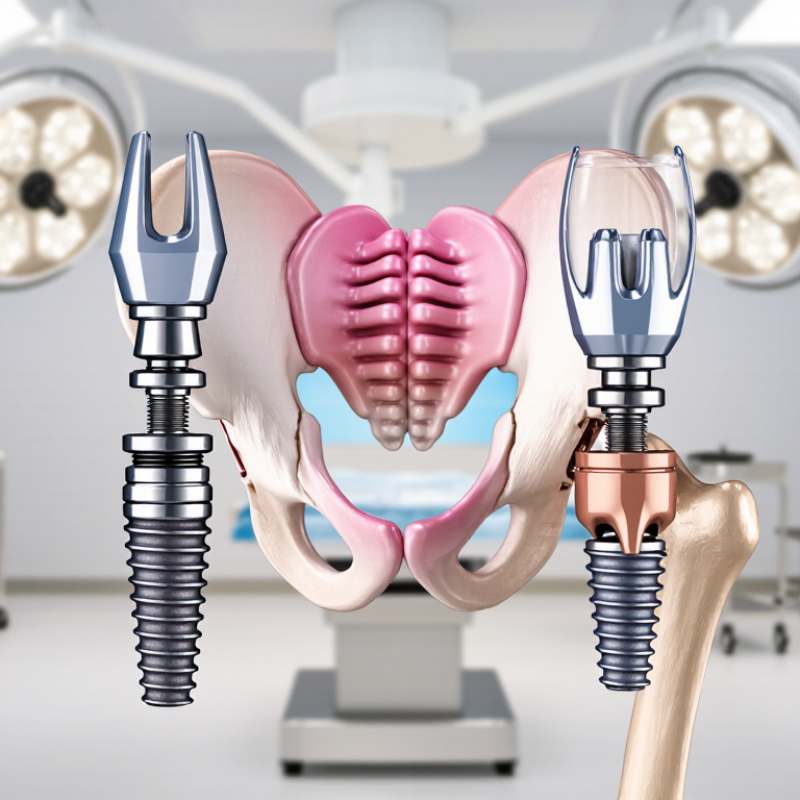
Orthopedic implants are medical devices used to support, replace, or stabilize bones and joints. A standard implant comes in a planned range of shapes and sizes, made for common anatomical patterns. During joint replacement, a surgeon compares these options with X-rays and measurements, then selects components that fit the patient’s bone and movement needs. Materials may include titanium alloys, cobalt-chromium alloys, ceramics, and medical-grade plastics. The exact choice depends on the procedure and the patient. Fit matters.
A custom implant is designed for an individual’s anatomy, often using detailed scans and digital planning. It may help address unusual bone shape, major bone loss, or complex revision surgery. The design can reflect a specific contour, such as a damaged pelvic surface, rather than relying only on standard sizes. Custom does not automatically mean better. It may require more planning, take longer to produce, and offer less long-term evidence for some uses. Standard implants, by contrast, have established options for many routine procedures. The surgeon weighs anatomy, diagnosis, activity, and surgical experience; scans alone cannot make that decision. Even careful planning has limits. The best fit is a clinical judgment, not simply the most individualized design.
A standard orthopedic implant is designed around a defined range of anatomy. Engineers use measured dimensions, computer models, and mechanical testing to create sizes that can be produced consistently. During surgery, clinicians select the closest fit from available options. The process is established, but anatomy does not always follow the average.
Custom implants begin with patient-specific imaging, often CT scans. Specialists convert those images into a digital model, then refine the design with the surgical team. They may check fit using a virtual model or a physical replica. Small details matter. Manufacturing can involve machining or additive processes, followed by careful surface finishing and inspection. Each step must match the approved design and material specifications. The implant is then prepared for clinical use under controlled quality procedures.
Custom work may address unusual bone shape or complex reconstruction needs, but it takes more planning and coordination. Image quality, segmentation choices, and design assumptions can affect the final fit. Standard implants benefit from repeatable production and broad clinical familiarity; custom designs offer greater tailoring, not guaranteed better outcomes. That distinction deserves attention. The right approach depends on the patient, the surgical plan, and the evidence available for the specific case.
Typical elastic modulus of materials used in orthopedic implants and bone
Custom implants change the geometry to match a patient’s anatomy; standard implants use established size ranges. Either approach may use the same material, so customization does not inherently change its stiffness. Values shown are approximate representative midpoints: UHMWPE 0.5–1.5 GPa, cortical bone 10–30 GPa, titanium alloy about 110 GPa, and CoCrMo alloy 210–230 GPa. Actual properties vary by material grade and product.
2026 Best Custom vs Standard Orthopedic Implants?
Standard orthopedic implants come in established sizes and shapes. Surgeons select from available options using imaging, measurements, and the patient’s anatomy. A standard implant may fit well when bone shape and surgical needs match its design. It can also support a familiar planning process.
Custom implants are designed for a particular anatomy or complex reconstruction. Their shape may reflect details visible on CT scans, such as an unusual bone contour or a significant defect. That closer match can help address specific surgical challenges, but it does not guarantee better function or fewer complications. Production takes planning, and the surgical team must account for positioning, fixation, and available instruments. Fit is only one part of the decision. Bone quality, alignment, soft tissue, and the patient’s goals matter too. The comparison is not always neat.
Tips: Ask how the implant choice affects the planned approach, recovery expectations, and backup options. Confirm what imaging is needed and whether a standard option could meet the same goals. A useful question: “What would change during surgery if the fit is different than expected?”
Standard implants come in established sizes and are usually easier to source. Their designs have broader clinical histories. The 2024 American Joint Replacement Registry Annual Report covers more than 3.7 million procedures across over 1,250 participating sites. That scale supports ongoing outcome tracking, but it does not prove standard implants suit every anatomy. Custom implants may help with severe deformity or complex revision surgery. They require detailed imaging and design work. A tailored shape does not guarantee better movement or fewer complications.
Tips: Ask your surgeon why a custom implant is recommended. Request the standard option’s expected fit, recovery, and revision risks. Get an itemized estimate, including imaging and design fees.
Custom devices can involve extra planning, manufacturing time, and expense; coverage varies, so confirm costs with your care team and insurer. Long-term comparative evidence is limited for many custom designs. Manufacturing delays or a poor fit may complicate treatment. Standard implants can also require compromises, such as removing more bone to fit available sizes. FDA guidance on 3D-printed medical devices highlights the need to control design and manufacturing quality. Both approaches carry surgical risks, including infection and loosening. The best choice depends on anatomy, diagnosis, surgeon experience, and your priorities.
2026 Best Custom vs Standard Orthopedic Implants?
Surgeons weigh anatomy, bone quality, deformity, prior operations, and the patient’s goals. Standard implants offer established sizing options and extensive use in routine procedures. Custom implants are designed around an individual’s imaging, which may help when anatomy is unusual or bone loss is substantial. But personalization does not guarantee better movement or longer implant life. Fit matters. A scan is only a map; real bone can differ from the model.
The UK National Joint Registry’s 21st Annual Report (2024) tracks more than four million joint replacement procedures. Its data supports ongoing monitoring of implant performance at scale, but does not prove that custom implants outperform standard ones. Comparative research remains limited for some procedures, so surgeons also consider planning time, manufacturing availability, cost, and the risks of unexpected findings during surgery. Sometimes the standard option is the more predictable choice. That judgment deserves a clear explanation.
Tips: Ask your surgeon what specific problem a custom implant would solve, what evidence supports it, and what the alternative is. Bring questions about imaging, recovery, and revision risk. A second opinion can help when the recommendation feels unclear.
Standard implants come in planned sizes for common bone shapes. Custom implants are designed around an individual’s anatomy, often using detailed scans.
It may help with unusual bone shape, major bone loss, or complex revision surgery. A tailored design is not automatically better.
Often, yes. They offer established sizing options and a broad history of use. Fit still needs careful assessment.
No. Personalization does not guarantee better results. Evidence comparing some custom designs with standard options remains limited.
They consider anatomy, bone quality, deformity, prior operations, and personal goals. A scan is a map, not the whole picture.
Both approaches can involve infection or loosening. Custom designs may require extra planning, cost, and manufacturing time. Delays can matter.
Ask what specific problem it addresses and what the standard alternative would be. Also ask about recovery, fit, and revision risks.
Request a clear explanation of the evidence, costs, and expected fit. A second opinion may help. This comparison cannot cover every case.
This article explains what custom and standard orthopedic implants are and how their design and manufacturing processes differ. Standard implants are produced in established sizes and configurations, while custom implants are tailored to an individual patient’s anatomy using clinical measurements and imaging. It also explores how each option may affect implant fit, surgical planning, and use during an operation. The question “What is the difference between custom and standard orthopedic implants” is considered through practical factors such as personalization, availability, and the level of preparation required.
The comparison also covers potential benefits, limitations, risks, and costs without suggesting that one approach is best for every patient. Custom implants may address unusual anatomical needs, but can involve additional design time and expense. Standard implants offer familiar, readily available options, though their range of fit may not suit every case. In 2026, surgeons weigh these considerations alongside a patient’s anatomy, diagnosis, treatment goals, and clinical circumstances when choosing an implant type.

Medev Medical